Brandvoys writes LinkedIn posts for B2B companies.

Any tool can write your first post.The tenth is the problem.

Most of them work from the two paragraphs on your homepage. That's enough for one post. By the tenth there's nothing left to say, so they make something up, and it goes out under your name.

50 credits. Enough for two posts with images.

Three things make a post worth reading.

It's written for someone specific.

It gives the person reading something to think about.

There's a reason the product exists, and the post says it.

Here's one that does all three. GreenShield Bio sells plant-based pest and mosquito repellents in India. Brandvoys read their site and wrote this.

The lemongrass coil has been burning in your bedroom for years. You know it helps. You have never known why.

Here is the actual mechanism.

Mosquitoes do not find you by sight. They follow two signals: the carbon dioxide you exhale and the volatile compounds your skin releases as you move and warm up. Those are the coordinates they navigate by. Remove them, and the mosquito has nowhere to go.

Lemongrass oil contains two active compounds, citronellal and geraniol. They do not kill mosquitoes. They do not repel them the way a bad smell pushes you away from something. What they do is mask the signals mosquitoes use to locate a human host. Your scent is still there. The mosquito just cannot read it. You become, in the most literal sense, invisible to its host-seeking system.

This is olfactory interference. Chemical camouflage. The mosquito's navigation fails not because it is harmed but because the information it needs has been scrambled.

Most products in this category call themselves “natural” and leave it there. The mechanism stays vague. GreenShield Bio builds plant-based mosquito repellents on formulations like this one, where lemongrass is the active ingredient doing a specific, explainable job rather than a fragrance included for comfort.

That distinction matters when you are choosing what burns near your child's pillow at night.
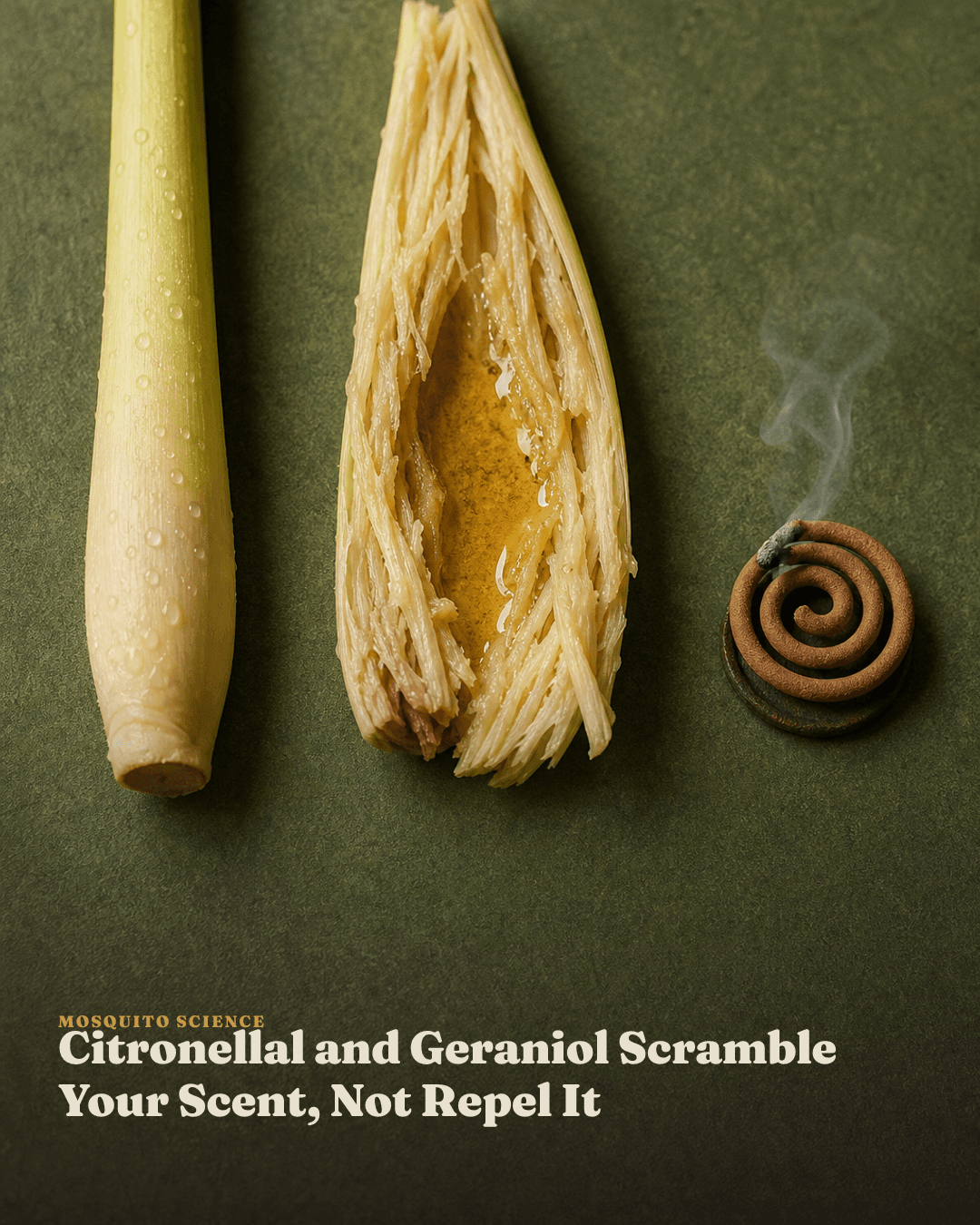
“Lemongrass oil contains citronellal and geraniol which disguise human scent from mosquitoes” — from greenshieldbio.com

Hover an underlined line to see where it came from.

The image is drawn from the post.

Not a stock photo that could sit on anyone's article. It's built for this one, with a line composited onto it that's drawn from the article's own facts. It comes with every post.

Generated LinkedIn post image for the lemongrass mosquito-repellent post, with the post's own headline composited onto the photograph

You don't tell it what to write.

It works out your audience

The people worth reaching, described closely enough that you'll recognise them. You never fill in a form about who they are.

It picks what to say to each of them

You say whether you're after leads or credibility. It comes back with three angles, each aimed at one of those people. You pick one and it writes.

It writes from your own facts

Every number, name, and specific claim about your business gets checked against what you've actually said. Anything that can't be traced is cut, and you're told it happened.

Content you'd actually put your name on.

Will it sound like me?

It sounds like someone who knows your business, because it only says things your business has said. You set the tone, and you can edit anything before it goes out.

Will it make things up?

Every number, name, and specific claim about your business is checked against your own material before the post reaches you. Anything that can't be traced is removed, and you're told when that happened. The argument built around those facts is the writing, and it's yours to edit.

$0

Free. 50 credits, enough for two posts with images.

$35 /mo

Founder. 500 credits a month, about 20 posts with images.

Post like it came from you.
Because it did.